
Light commercial vehicles (delivery vans, utility trucks, last-mile logistics vehicles) represent the fastest-growing segment of the EV market [1]. But unlike passenger cars, where range and acceleration sell the product, commercial vehicle electrification lives or dies on total cost of ownership, uptime reliability, and fleet-level operational efficiency. The BMS sits at the center of all three. And yet it's often the most underspecified component in commercial EV projects.
Commercial Vehicles Are a Different Animal
A passenger EV might charge once a day, drive on smooth roads, and sleep in a climate-controlled garage. A delivery van lives a harder life. It may cycle two or three times daily during peak season [2]. Constant stop-start driving means high-frequency current transients from acceleration and regenerative braking. The van parks outdoors in whatever weather happens: freezing mornings, scorching afternoons. And every hour of downtime costs money in missed deliveries.
These conditions demand more from the BMS than basic cell monitoring. The BMS needs high-frequency current measurement for accurate SOC estimation during aggressive driving profiles. It needs enough temperature sensors to detect localized hotspots from uneven cooling, not just one ambient measurement [3]. And it has to communicate reliably with the vehicle controller, the charger, and the fleet management platform simultaneously.
We've worked with several commercial vehicle OEMs during their diesel-to-electric transition, and the pattern is consistent: they underestimate BMS complexity until the prototype stage, then scramble to find a platform that handles the real-world demands.
Standalone vs. Distributed Architecture
Light commercial vehicles typically use 30 to 100 kWh battery packs at 300V to 600V [4]. That's an interesting middle ground for BMS architecture.
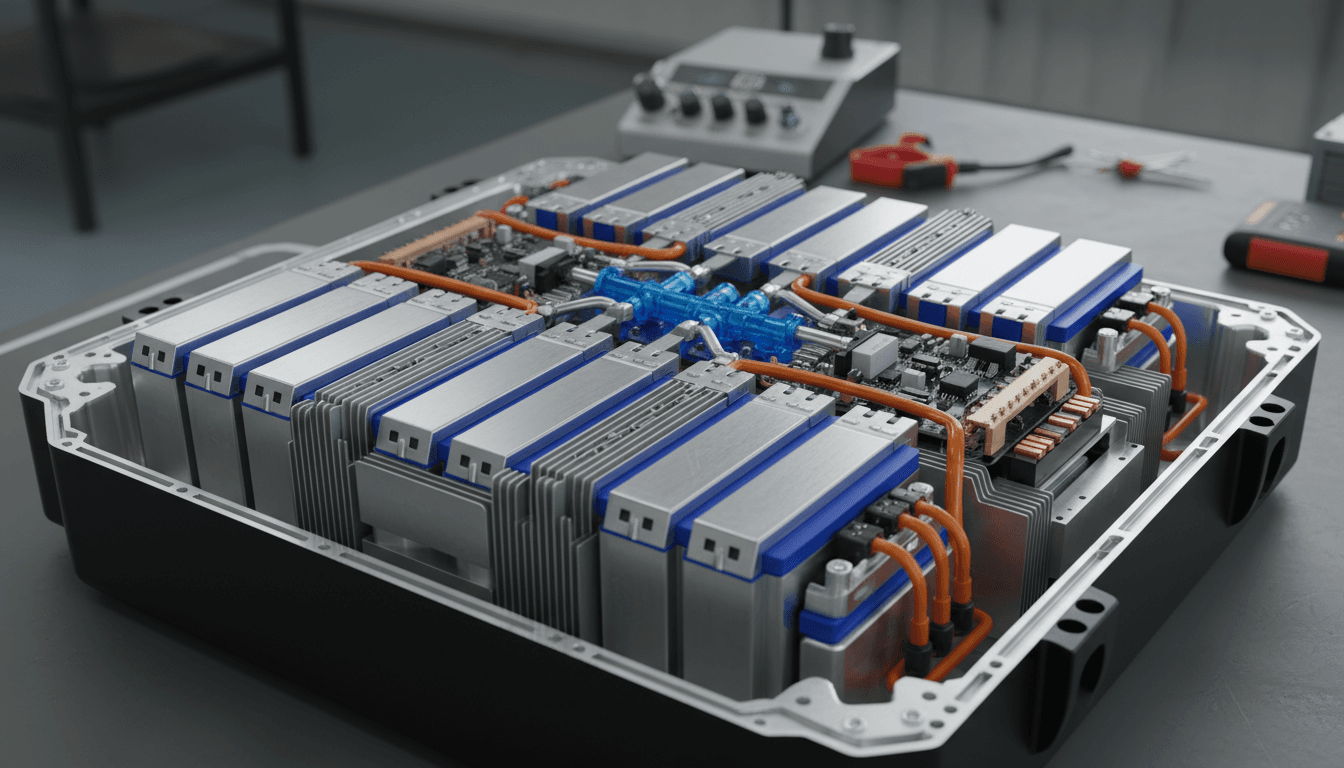
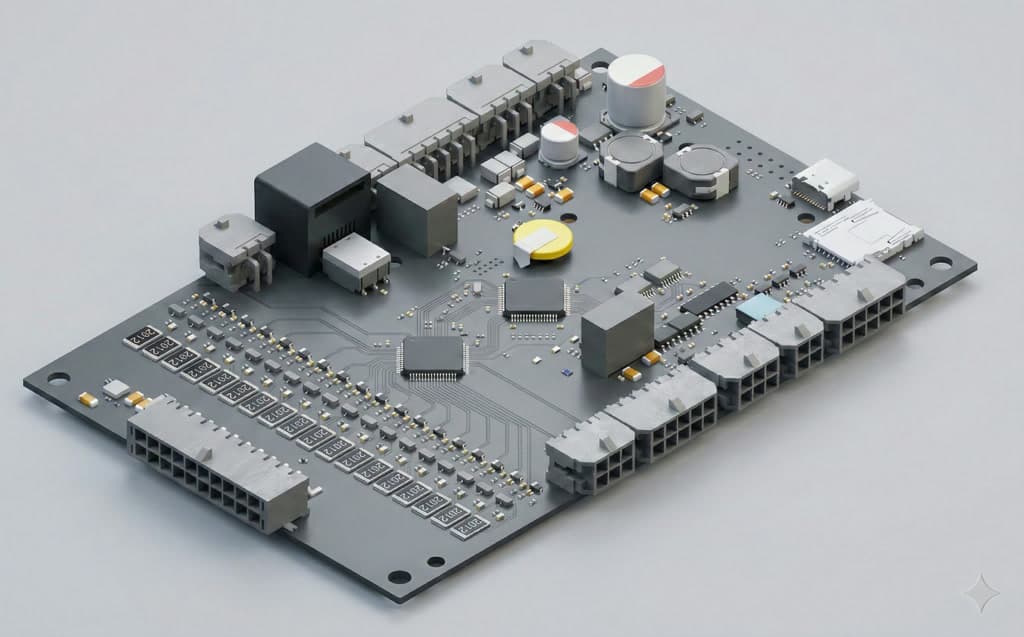
At the lower end (30 to 50 kWh with 96 to 120 cells), a standalone BMS handles everything in one unit. The LiBat BMS1601, for example, monitors 6 to 16 cells directly, integrates power and energy measurement on-board with its built-in shunt (no external current sensor needed), manages precharge and predischarge paths, and communicates via isolated CAN Bus and RS485 [5]. One board, minimal wiring, compact footprint. Vehicle OEMs working at this pack size tend to optimize for component count and assembly simplicity.
For larger packs (60 to 100 kWh, cell counts above 200), a master-slave architecture makes more sense. A BMS1820 master paired with BMS1202 slave modules scales to hundreds of cells while maintaining the communication interfaces vehicle controllers expect [5]: CAN Bus for real-time telemetry, RS485 for diagnostics, and WiFi or cellular for cloud connectivity.
Why OTA and Cloud Connectivity Matter for Fleets
For a single vehicle, firmware updates via laptop cable are annoying but manageable. For a fleet of 200 vehicles across 8 depots, they're prohibitive [6]. That's where cloud-connected BMS with over-the-air update capability fundamentally changes the maintenance model. New SOC algorithms, revised protection thresholds, seasonal configuration changes, all deployed remotely during overnight charging windows without a single technician visit.
Similarly, cloud monitoring transforms fleet battery management from reactive to proactive [7]. Instead of discovering a battery problem when a delivery van fails on its route, the fleet manager gets early alerts: a cell trending warmer than its neighbors, a gradual SOC drift, increasing balancing events. Maintenance gets scheduled during planned downtime rather than causing roadside breakdowns.
For fleet operators, these capabilities determine whether electrification actually delivers on its total cost of ownership promise. The best battery chemistry and the most efficient drivetrain don't matter much if the fleet spends more on battery maintenance than it saves on diesel.
The Transition Is More Than a Powertrain Swap
Converting a commercial vehicle from diesel to electric isn't just swapping an engine for a motor and a fuel tank for a battery. The vehicle's entire intelligence layer changes [8]. The BMS becomes the most critical electronic component in the vehicle, responsible for safety, performance, longevity, and increasingly regulatory compliance as battery passport requirements take effect [9].
For OEMs and fleet operators navigating this transition, the BMS platform decision has long-term consequences. Cloud connectivity, OTA capability, multi-protocol communication, and data collection for eventual passport compliance aren't future-proofing [10]. They're the baseline for a commercial EV that's competitive in today's market.
References
- [1]ACEA, Light Commercial Vehicles: Electric and Alternatively Powered, EU Market Data 2024
- [2]McKinsey & Company, Why the Economics of Electrification Make Fleets Go First, 2023
- [3]Pesaran et al., Tools for Designing Thermal Management of Batteries in Electric Drive Vehicles, NREL, 2013
- [4]IEA, Global EV Outlook 2024 — Trends in Electric Light Commercial Vehicles
- [5]LiBat — Battery Management Systems: BMS1601, BMS1820, and Complete Product Lineup
- [6]LiBat — OTA Firmware Updates: Managing Distributed Battery Fleets at Scale
- [7]BloombergNEF, Electric Vehicle Outlook 2024 — Fleet Electrification Economics
- [8]Roland Berger, E-Mobility Index 2024 — Commercial Vehicle Electrification Trends
- [9]Regulation (EU) 2023/1542 — Digital Battery Passport Requirements
- [10]Transport & Environment, Electrifying Last-Mile Delivery in Europe, 2023