The AI-driven battery management market is projected to grow from $4.1 billion in 2025 to $18.5 billion by 2032 [1]. Those numbers reflect something real: traditional BMS algorithms (static lookup tables, fixed thresholds, lab-calibrated models) leave significant performance on the table when batteries hit the real world. Cells age differently than the datasheet predicted. Operating conditions vary in ways the lab didn't test. And the gap between what a battery could deliver and what a static BMS allows it to deliver grows wider with every charge cycle.
AI closes that gap. But what does it actually do?
Three Things AI Does Inside a BMS
Strip away the marketing, and AI in battery management comes down to three capabilities that matter.
Better state estimation. Traditional SOC and SOH calculations rely on Extended Kalman Filters or coulomb counting with voltage-based correction, both calibrated against laboratory discharge curves [2]. These methods work well for new batteries under controlled conditions and poorly for aged batteries under real-world stress. Recent research demonstrates that deep learning architectures, particularly Long Short-Term Memory (LSTM) and Gated Recurrent Unit (GRU) networks, can reduce SOC estimation error to below 1 percent by learning temporal patterns in charge-discharge data that physics-based models miss [3]. More advanced approaches like physics-informed neural networks (PINNs) combine electrochemical domain knowledge with data-driven learning, achieving the interpretability of physical models with the adaptability of machine learning [4].
The practical result: more accurate range predictions, better capacity utilization, and more reliable end-of-life forecasting. For fleet operators, that translates directly to fewer unexpected battery replacements and better procurement planning.
Earlier fault detection. Instead of reacting when a cell fails, AI identifies degradation signatures weeks or months in advance. A 2024 study in Nature Scientific Reports showed that machine learning regression models, particularly Gaussian Process Regression, can predict SOH degradation trajectories from real-time driving data with accuracy exceeding 95 percent [5]. A cloud-connected BMS aggregating data across hundreds of packs can spot early signs of capacity fade, impedance rise, or thermal anomalies that rule-based threshold systems miss entirely. We've seen cases where pattern-matching algorithms flagged cells that looked fine by every traditional metric but were clearly on a degradation trajectory that would have led to failure within months.
Smarter thermal management. Fast charging generates heat. How much heat, and where, depends on ambient temperature, charging history, cell age, and state of charge, all interacting simultaneously. AI-based thermal models adjust cooling strategies in real time, balancing charging speed against battery longevity in a way that static algorithms handle poorly because the trade-off surface is too complex for hand-tuned rules [6].
Edge vs. Cloud: Where Should AI Run?
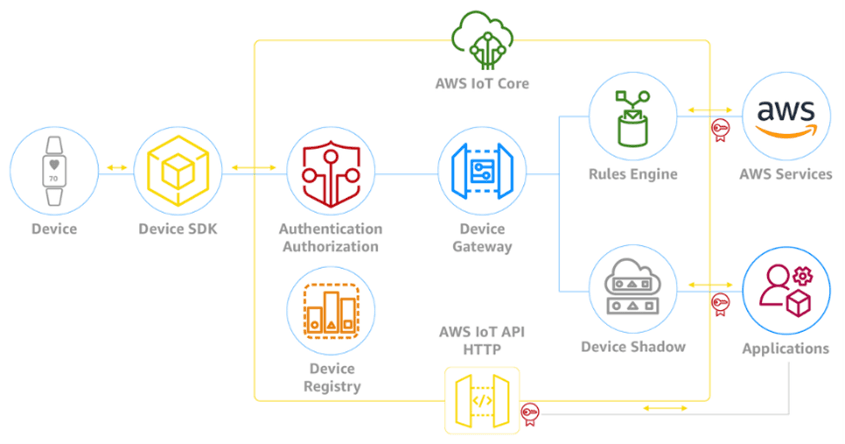
This is where the architecture conversation gets interesting. Recent academic consensus points to a three-tier model: end (sensor layer), edge (local processing), and cloud (fleet-level intelligence) [7]. AI workloads can run at the edge (on the BMS hardware itself) or in the cloud (on servers with far more processing power). The answer is both, but for different reasons.
Edge AI handles time-critical decisions: protection logic, real-time balancing adjustments, and thermal management need millisecond response times and can't wait for a round trip to the cloud. Research shows that edge-deployed models reduce inference latency by over 40 percent compared to cloud-based processing while maintaining prediction accuracy above 95 percent [8]. Cloud AI handles pattern recognition at scale: fleet-level degradation analysis, lifetime prediction, and anomaly detection benefit from aggregating data across thousands of packs and running models that wouldn't fit on a microcontroller.
The computational constraints are real. An ARM Cortex-M4 microcontroller running at 168 MHz with 256 KB of SRAM cannot execute a deep neural network with millions of parameters. But it can run a lightweight inference model (quantized, pruned, optimized for fixed-point arithmetic) that was trained on far more powerful hardware. The key is that training happens in the cloud with fleet-wide data, while inference happens at the edge with local data.
How We Approach This at LiBat
The edge-plus-cloud architecture is how we've designed the LiBat ecosystem, and our experience in the OPEVA Horizon Europe consortium has directly informed this approach [9].
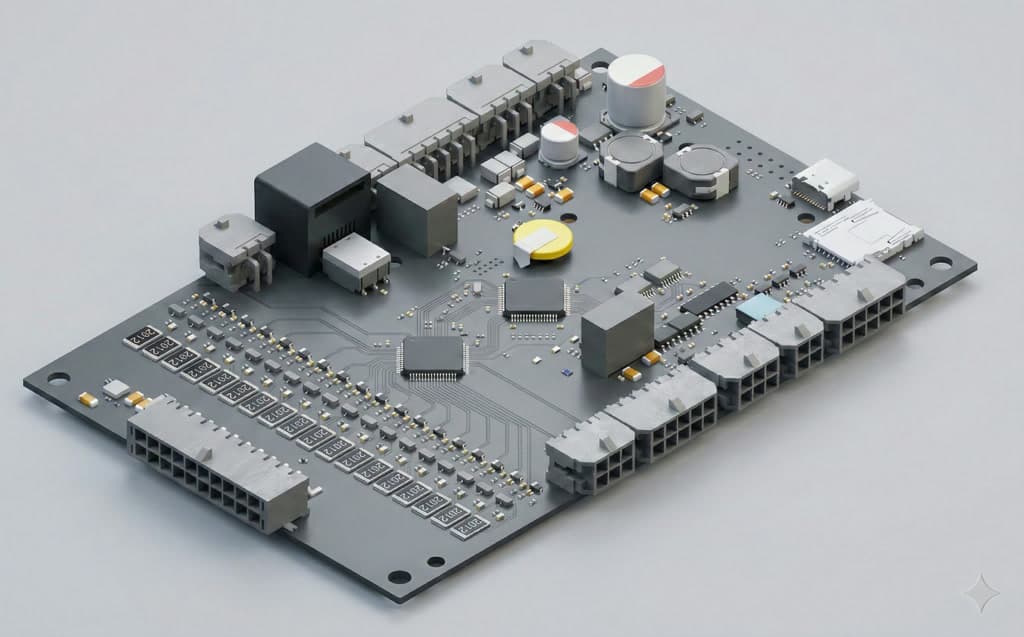
At the edge: Our BMS hardware (BMS1810, BMS1820, BMS1601, BMS1802) runs real-time protection logic, SOC estimation, and passive cell balancing on dedicated microcontrollers [10]. These time-critical functions execute in microseconds without any dependency on network connectivity. The firmware is field-updatable through over-the-air updates, which means the algorithms running at the edge can improve continuously as we learn from fleet-wide data.
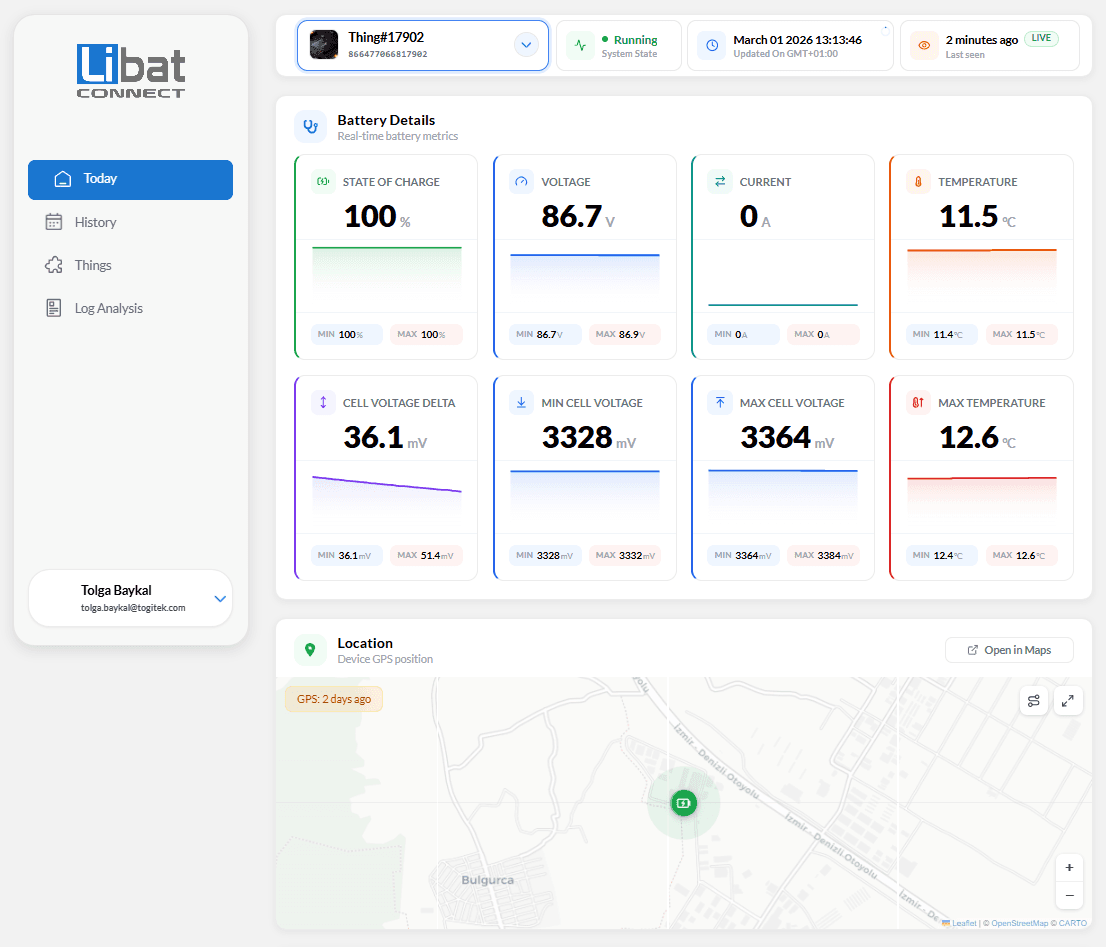
At the cloud: LiBat Connect receives structured telemetry from BMS units across installations and geographies [11]. Every cell voltage, every temperature reading, every charge cycle, every protection event gets timestamped and stored. At fleet level, the platform enables comparisons that a single BMS can never make on its own: which battery racks are degrading faster than expected, which vehicles consistently run at higher temperatures, which installation sites show unusual cell imbalance patterns.
Closing the loop: Insights from cloud-level analysis feed back into the edge firmware through over-the-air updates. A revised SOC algorithm trained on thousands of real-world charge cycles replaces the lab-calibrated version. Updated protection thresholds reflect actual field conditions rather than worst-case laboratory assumptions. LiMon, our desktop configuration tool, provides the engineering interface for validating these updates before deployment [11].
Our OPEVA research collaboration has given us direct exposure to cutting-edge work in ontology-driven data management and AI-enhanced battery monitoring [9]. The academic frameworks we've contributed to through IEEE MetroAutomotive publications are informing how we structure the data pipeline from cell measurement to fleet-level analytics.
The Digital Twin Opportunity
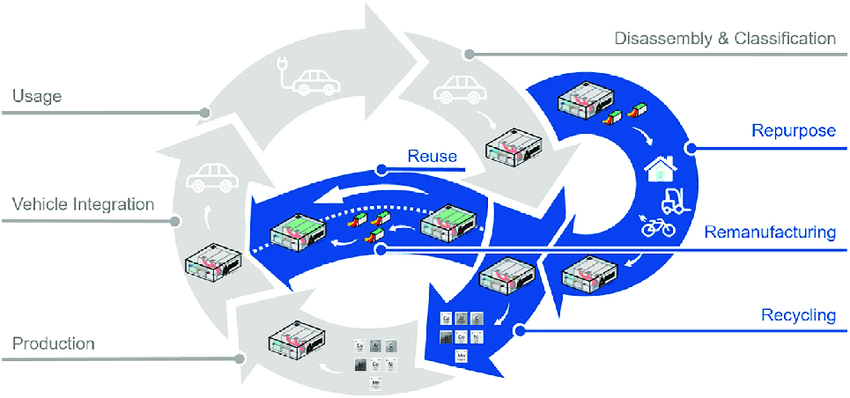
One of the most promising applications of AI in battery management is the digital twin, a virtual model of a physical battery that mirrors its real-time state and predicts future behavior. A comprehensive 2025 review in the MDPI Batteries journal demonstrates how digital twins integrate cloud-edge computing with AI to enable lifecycle optimization, from initial deployment through second-life assessment [12]. Digital twins let you run scenarios: what happens if we increase charging speed by 10 percent? How much cycle life do we trade for faster turnaround? What's the optimal retirement point for a specific pack?
For fleet operators managing hundreds or thousands of batteries, this kind of scenario planning changes battery management from a reactive maintenance function to a strategic operations tool. We're actively developing the data infrastructure to support digital twin capabilities within LiBat Connect. The same cloud-connected BMS architecture that provides fleet monitoring today becomes the foundation for predictive simulation tomorrow.
Transfer Learning: Solving the Cold Start Problem
One of the most significant practical challenges in AI-based battery management is the cold start problem: a newly deployed battery has no operational history to train against. Recent research on transfer learning addresses this directly. A 2025 study published in PMC demonstrated that deep transfer learning models can estimate SOH under fast-charging conditions by transferring knowledge from extensively tested battery types to new ones, reducing RMSE from 0.00741 to 0.00109 [13].
This matters for BMS manufacturers because it means AI models trained on one chemistry or application can be adapted to new contexts without starting data collection from scratch. A model trained on LFP cells in energy storage applications can be fine-tuned for NMC cells in micro-mobility with significantly less data than training from zero. For our platform, this means fleet-wide learning accelerates as the installed base grows across different applications and chemistries.
What This Means If You're Choosing a BMS
The shift from hardware-centric to software-defined BMS is accelerating [14]. When evaluating a platform, it's worth asking whether it supports over-the-air firmware updates (can the BMS improve after deployment?), whether cloud connectivity is built in or bolted on, and whether the vendor has a data strategy beyond basic monitoring dashboards.
The BMS you choose today will need to support AI workloads tomorrow. That doesn't mean you need AI features on day one. It means you need a platform with the connectivity, compute headroom, and update capability to deliver them when they're ready. At LiBat, we've built our entire ecosystem around this principle: hardware that collects rich data, firmware that can be updated remotely, and a cloud platform designed to turn that data into intelligence.
References
- [1]Allied Market Research, AI-Driven Battery Management System Market Size and Forecast, 2025-2032
- [2]Plett, G.L., Battery Management Systems, Volume I: Battery Modeling, Artech House, 2015
- [3]Ogunfuye, S. et al., Towards a Smarter Battery Management System: A Critical Review on Deep Learning-Based State of Charge Estimation of Lithium-Ion Batteries, ScienceDirect, 2025
- [4]Advancements in the Estimation of the State of Charge of Lithium-Ion Battery: A Comprehensive Review of Traditional and Deep Learning Approaches, Journal of Materials Informatics, 2024
- [5]Ramasamy, V. et al., Enhanced SOC Estimation of Lithium Ion Batteries with Real-Time Data Using Machine Learning Algorithms, Nature Scientific Reports, 2024
- [6]Pesaran, A.A., Battery Thermal Management in EVs and HEVs: Issues and Solutions, National Renewable Energy Laboratory (NREL)
- [7]Chen, X. et al., An Intelligent Battery Management System with End-Edge-Cloud Connectivity: A Perspective, Sustainable Energy and Fuels, RSC Publishing, 2025
- [8]Edge Intelligence for Adaptive Battery Health Monitoring in Next-Generation Electric Vehicles, ResearchGate, 2025
- [9]OPEVA Project — OPtimising Electric Vehicle Autonomy, Horizon Europe, Official Project Website
- [10]LiBat — Battery Management Systems: Complete Product Lineup and Communication Interfaces
- [11]LiBat — Configuration Tools: LiMon PC Tool, LiMon CONNECT, and LiBat CONNECT Mobile
- [12]Artificial Intelligence and Digital Twin Technologies for Intelligent Lithium-Ion Battery Management Systems: A Comprehensive Review, MDPI Batteries, Vol. 11, 2025
- [13]Battery State of Health Estimation Under Fast Charging via Deep Transfer Learning, PMC, 2025
- [14]McKinsey & Company, Battery 2030: Resilient, Sustainable, and Circular — Software-Defined Battery Management