BMS firmware has traditionally been a "configure once, forget forever" affair. A technician connects a diagnostic tool during commissioning, sets the protection parameters, and the BMS runs unchanged for the life of the battery [1]. That model works fine for single installations. It falls apart at fleet scale, and it permanently locks away performance improvements from every BMS already deployed.
The Fleet Update Problem
Here's a scenario we hear regularly. A logistics company operates 200 electric delivery vehicles across 8 depots. Each vehicle has a BMS configured at the factory two years ago. Since then, the engineering team has released three firmware updates: one improving SOC estimation accuracy, another optimizing balancing schedules for faster equalization, and a third adding support for a new fast-charging protocol.
Without OTA capability, applying these updates requires a technician at each vehicle: laptop, proprietary cable, firmware transfer, verification, documentation. At 30 minutes per vehicle, that's 100 technician-hours for the full fleet [2]. About two and a half weeks of dedicated effort. If the depots are geographically spread, travel time doubles or triples the real cost.
What actually happens? Most fleet operators just don't update. The vehicles run on outdated firmware indefinitely, missing improvements that could extend battery life, improve range estimation, and enable new charging capabilities. It's not that they don't want the updates. It's that the logistics of deploying them are prohibitive.
How OTA Changes the Picture
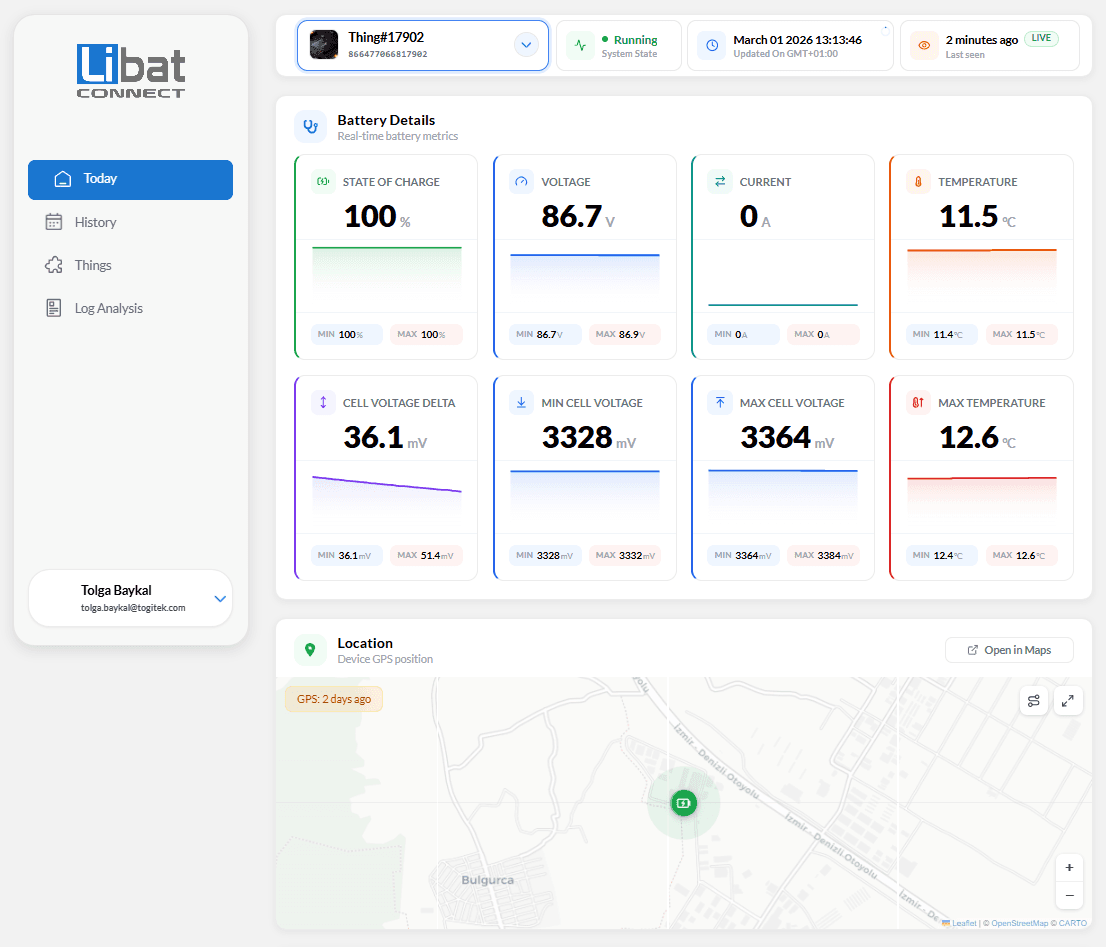
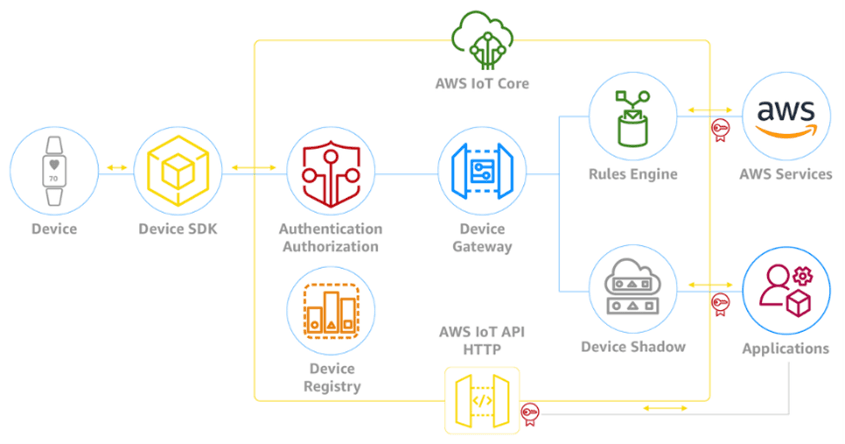
We are actively developing over-the-air firmware update capability for our cloud-connected BMS masters through LiBat Connect [3]. This is a multi-faceted engineering effort that requires extensive validation across security, reliability, and rollback scenarios, and our work is ongoing. Here is the architecture we are building toward, designed for fleet-scale deployment with minimal operational disruption.
A fleet manager uploads a validated firmware package to the dashboard and selects targets: individual vehicles, a specific depot, or the entire fleet. The platform schedules updates during overnight charging windows when vehicles are plugged in and idle. The gateway on each vehicle downloads the package in the background during normal operation.
At the scheduled window, the BMS verifies package integrity with cryptographic checksums, backs up the current firmware and configuration, installs the update, and runs a self-test [4]. If the self-test passes, it resumes normal operation. If any step fails (corrupted download, failed verification, or self-test issue), the BMS rolls back to the previous firmware automatically. The vehicle is never left in a non-functional state.
The fleet manager will get a deployment report: which vehicles updated successfully, which are pending (haven't connected to a gateway yet), and whether any rollbacks occurred. Firmware version tracking across the fleet will update automatically.
No technician visits. No laptop cables. No scheduling headaches. That's the target.
Where OTA Delivers the Most Value
SOC algorithm improvements. State of charge calculation is inherently imperfect. It's based on models that approximate real cell behavior [5]. As field data accumulates across thousands of charge cycles, the engineering team finds and fixes systematic biases. Field data from cold-weather operation might reveal that temperature compensation doesn't fully account for a specific cell chemistry's behavior. The refined model gets packaged as an OTA update and reaches every vehicle in a single overnight window.
Seasonal configuration changes. Winter operation benefits from more conservative low-temperature charging limits. Summer needs adjusted thermal protection thresholds. Rather than dispatching technicians twice a year, the fleet manager pushes seasonal configuration profiles from the dashboard. Different profiles can target different vehicle groups: northern and southern depots get different parameters.
New feature deployment. When a new fast-charging protocol rolls out or a customer needs a new CAN Bus message format, the capability can be added to deployed BMS units without hardware changes [6]. Once operational, this will enable deployment of communication protocol updates, new diagnostic features, and improved balancing algorithms, all remotely, without a single truck roll.
Security Isn't Optional
OTA capability introduces a legitimate concern: the mechanism that enables authorized updates could be exploited for unauthorized ones. Our architecture addresses this with multiple layers.
Firmware packages are cryptographically signed during the build process. The BMS verifies the signature before accepting any update. Packages that don't match the authorized signing key are rejected [7]. The cellular connection between vehicle and cloud is encrypted. And the automatic rollback mechanism means that even a corrupted update can't permanently disable the BMS.
For fleet operators evaluating OTA-capable BMS, the security architecture matters as much as the update mechanism itself. A system that can be remotely updated must be designed so that only authorized updates are accepted [8].
The Bigger Picture
OTA-capable BMS changes what a battery fleet is. Instead of static hardware that degrades from the day it's installed, your batteries become systems that improve over time: more accurate SOC estimation, better balancing strategies, new capabilities added remotely as the technology evolves [9]. The maintenance model shifts from periodic manual intervention to continuous automated improvement.
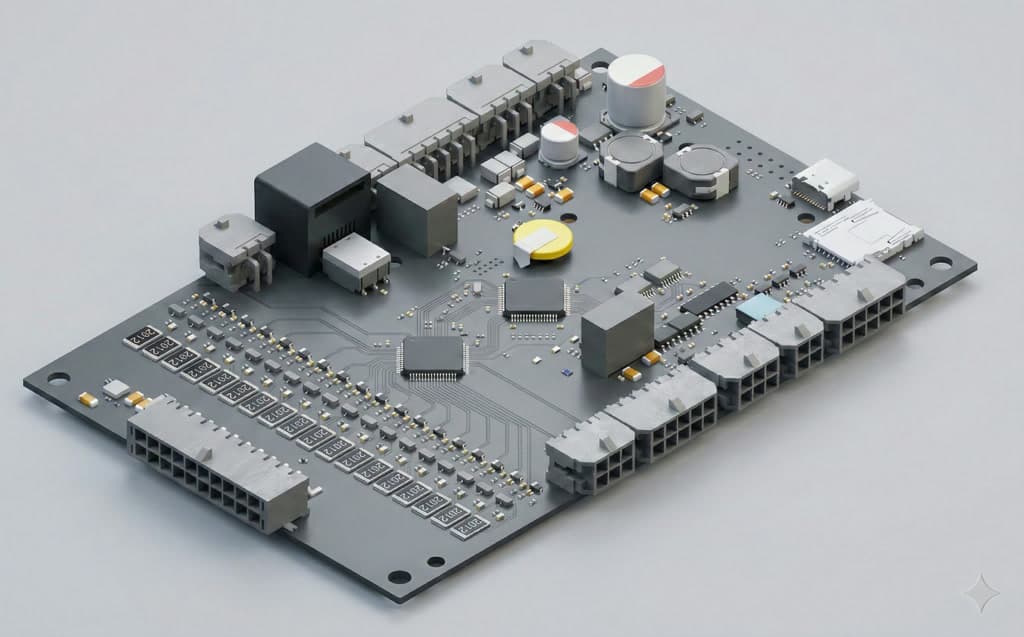
That shift starts with cloud connectivity built into the BMS from day one, which is why we designed our hardware with OTA in mind from the beginning [10]. Retrofitting OTA onto a system that wasn't designed for it is possible in theory, painful in practice, and never as reliable as a native implementation.
References
- [1]Andrea, D., Battery Management Systems for Large Lithium-Ion Battery Packs, Artech House, 2010
- [2]McKinsey & Company, Why the Economics of Electrification Make Fleets Go First, 2023
- [3]LiBat — Configuration Tools: LiMon PC Tool, LiMon CONNECT, and LiBat CONNECT Mobile
- [4]ISO 24089:2023 — Road vehicles — Software update engineering
- [5]Plett, G. L., Battery Management Systems, Volume I: Battery Modeling, Artech House, 2015
- [6]LiBat — Battery Management Systems: Complete Product Lineup and Communication Interfaces
- [7]UNECE Regulation No. 155 — Cyber Security and Cyber Security Management System
- [8]ISO/SAE 21434:2021 — Road vehicles — Cybersecurity engineering
- [9]BloombergNEF, Electric Vehicle Outlook 2024 — Fleet Electrification Economics
- [10]Bansal, P., OTA Updates in Automotive: Challenges and Best Practices, SAE International, 2022