
Startups are built for speed: ship fast, iterate faster, let the market validate your product. Academia operates on a different clock: rigorous methodology, peer review, reproducible results, publications that build on decades of prior work. These two worlds don't always speak the same language.
At LiBat, the choice to operate in both is deliberate. Not because it's easy (it's not), but because building safety-critical battery systems demands it. When your product sits between a lithium cell and a human being, "it works in our lab" is not a sufficient standard. You need peer-reviewed validation alongside commercial pragmatism.
Published Research in 2025
The team contributed to several academic publications and presentations during the year.
At the 2025 IEEE International Workshop on Metrology for Automotive (MetroAutomotive), we co-authored a paper titled "Ontology-Driven Metrology Data Management for Wireless Charging, Battery Management, and Predictive Maintenance in Electrical Vehicles" [1]. It addresses a challenge we face daily in our engineering work: how to organize and standardize the enormous volume of measurement data generated by BMS systems, charging infrastructure, and predictive algorithms. The academic framing forced us to think about the problem more rigorously than we would have in a purely product-development context, and the resulting data architecture is better for it.
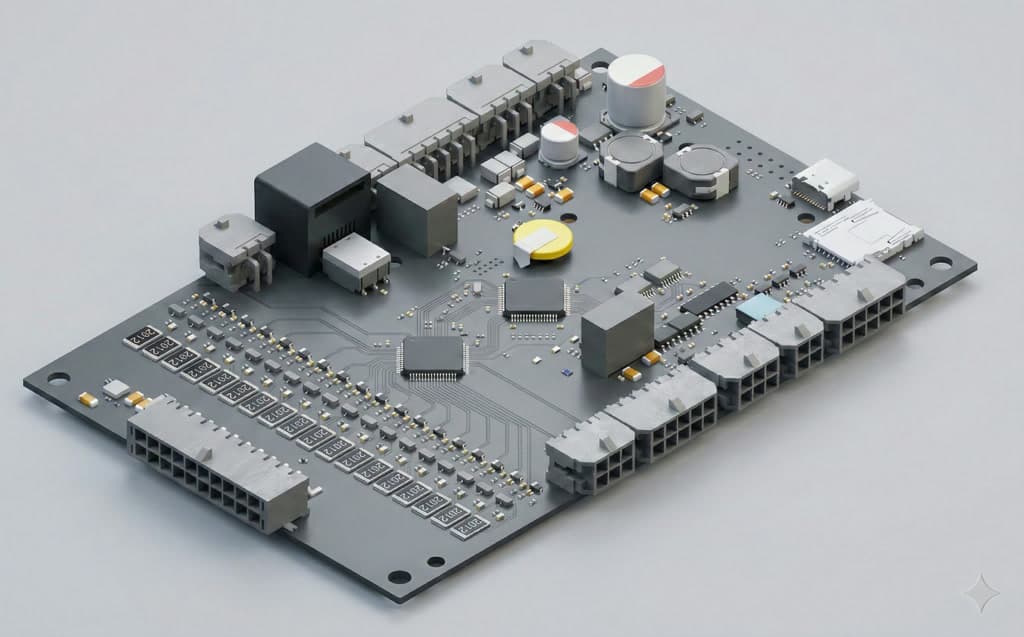
At ISASTECH 2025, we published a paper on "Multi-Purpose Electronic Contactor Design with High-Side FET Driver and Insulation Resistance Measurement" in the full proceedings [2]. This design, a compact solution for power path control and safety monitoring, emerged directly from our high-voltage product development for energy storage applications. It's a good example of research that started as an engineering problem and turned into something the broader community can build on.
At the Brussels Institute for Advanced Studies (BrIAS) event on Battery Management and Future Technologies at Vrije Universiteit Brussel, we presented two posters: one on cloud-aided battery management with cybersecurity and AI, and another on the multi-purpose electronic contactor design [3]. Both were developed through our OPEVA project collaboration [4] [10].
Industry Events: A Different Kind of Exchange
Formal publications reach a specific audience. Industry events reach a different one, and both matter.
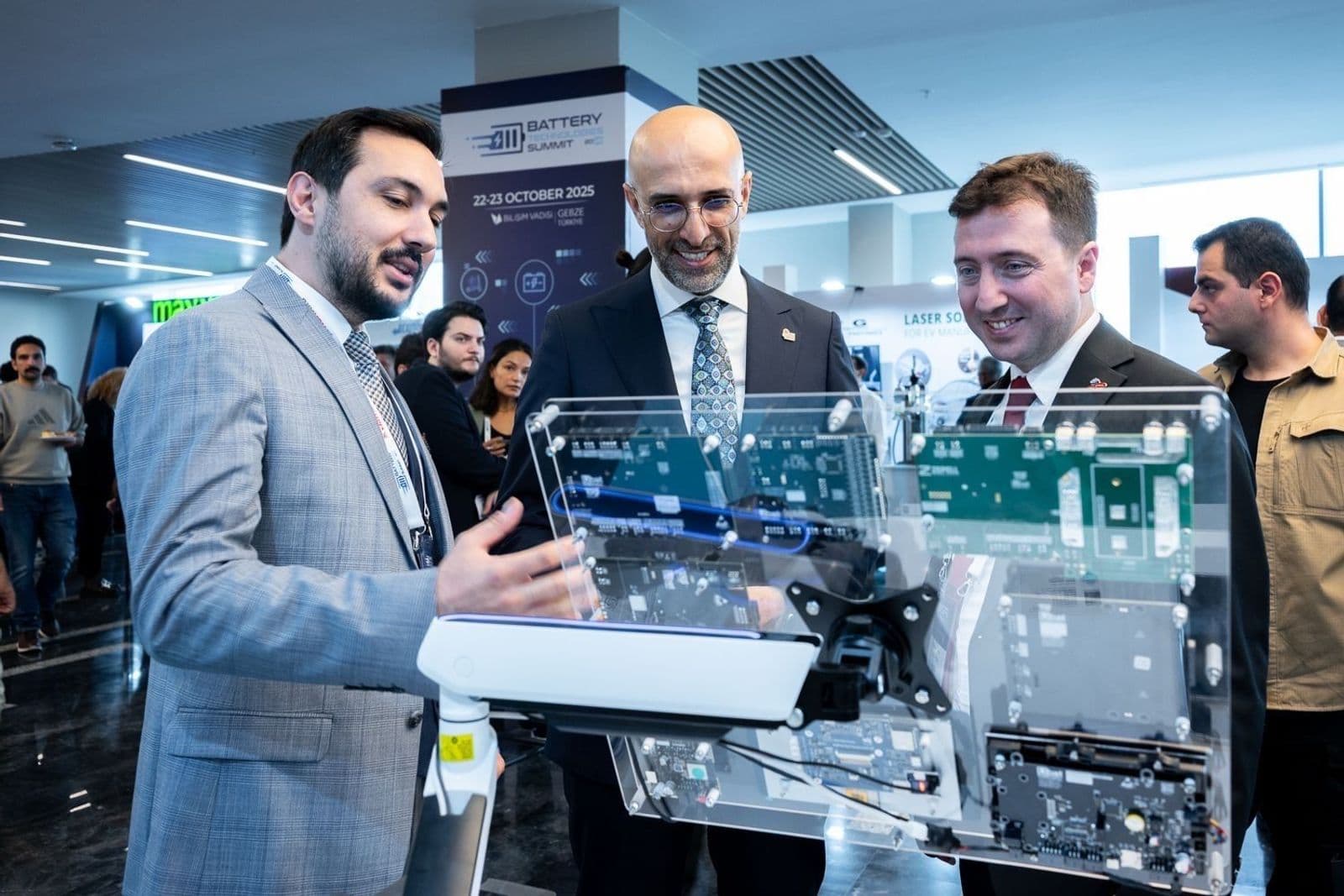
The keynote at the Battery Technologies Summit 2025 at Bilişim Vadisi translated our research into a format that industry decision-makers could act on [5]. Speaking alongside representatives from CATL, Arthur D. Little, and Vestel Mobility placed the work in a commercial context that academic papers don't provide.
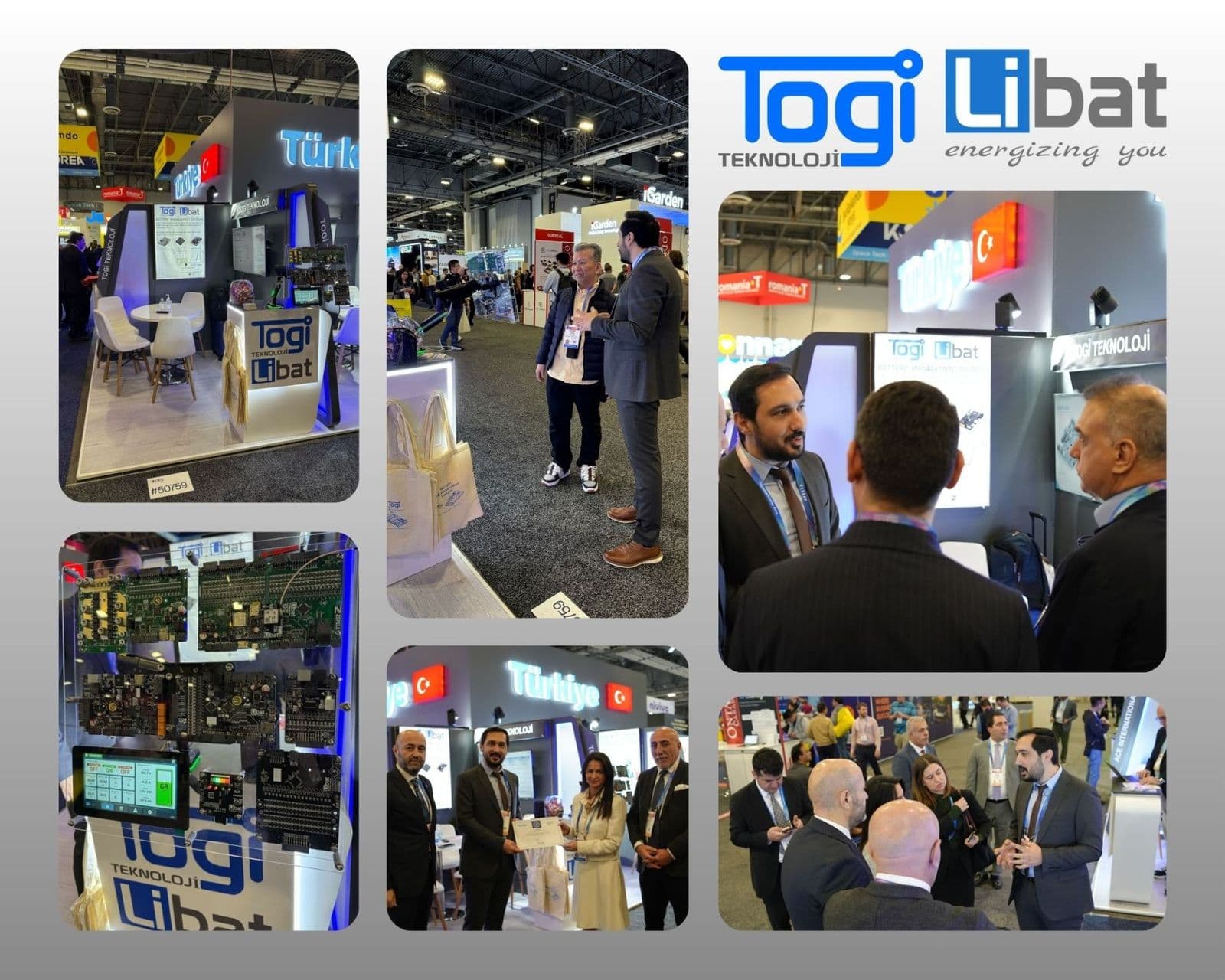
The TwinBat Workshop at Gebze Technical University, "Batteries from Lab Scale to Prototype," tackled a question directly relevant to what we do: how laboratory battery research transitions to production-ready systems [6]. Attending the Würth Elektronik EMC Seminar gave us practical design techniques that feed directly into our board layouts [7]. These aren't resume items. They're inputs to product engineering.
Research contributions aren't vanity metrics. They signal technical depth, transparency, and a willingness to subject your work to external scrutiny, qualities that matter when someone is evaluating a BMS partner for safety-critical applications.
Why Customers Should Care
Companies that publish peer-reviewed work understand their technology at a level that goes beyond internal testing. The rigor required for IEEE publication is a quality signal for engineering culture.
Publishing design methodologies openly, rather than hiding behind black-box products, builds trust. And the technologies explored in research today become product features tomorrow [8]. Our work on cybersecurity, AI-enhanced battery management, and ontology-driven data management points where the product line is heading [9]. For customers evaluating a long-term BMS platform, that visibility into the roadmap matters.
References
- [1]IEEE International Workshop on Metrology for Automotive (MetroAutomotive), 2025 Proceedings
- [2]ISASTECH 2025 — International Symposium on Advanced Sciences and Technologies, Conference Proceedings
- [3]Brussels Institute for Advanced Studies (BrIAS) — Battery Management and Future Technologies Event, Vrije Universiteit Brussel
- [4]CORDIS — OPEVA: OPtimising Energy Efficiency and Driving Range of Electric Vehicles through Advanced Thermal Management, Horizon Europe
- [5]Battery Technologies Summit 2025 (BTS2025), Bilişim Vadisi, Gebze
- [6]TwinBat — Twinning for Advancing Sustainable Battery Technologies, Gebze Technical University
- [7]Würth Elektronik — EMC Design and Application Seminars
- [8]LiBat — Battery Management Systems: Complete Product Lineup and Communication Interfaces
- [9]LiBat — Configuration Tools: LiMon PC Tool, LiMon CONNECT, and LiBat CONNECT Mobile
- [10]OPEVA Project — OPtimising Electric Vehicle Autonomy, Official Project Website