Lithium batteries power everything from electric cargo bikes to grid-scale energy storage, yet the way we buy and manage them hasn't kept up [1]. For most manufacturers of light electric vehicles and industrial equipment, batteries represent 30 to 50 percent of the total product cost. That capital expenditure alone slows adoption of the technology that promises cleaner, more efficient mobility.
Worse, most batteries operate as isolated black boxes. The health data, usage patterns, and degradation signals locked inside every cell go uncollected and unused. After a decade of building battery management systems, my conviction is clear: the future of energy is rented, not owned.
Decoupling the Battery from the Application
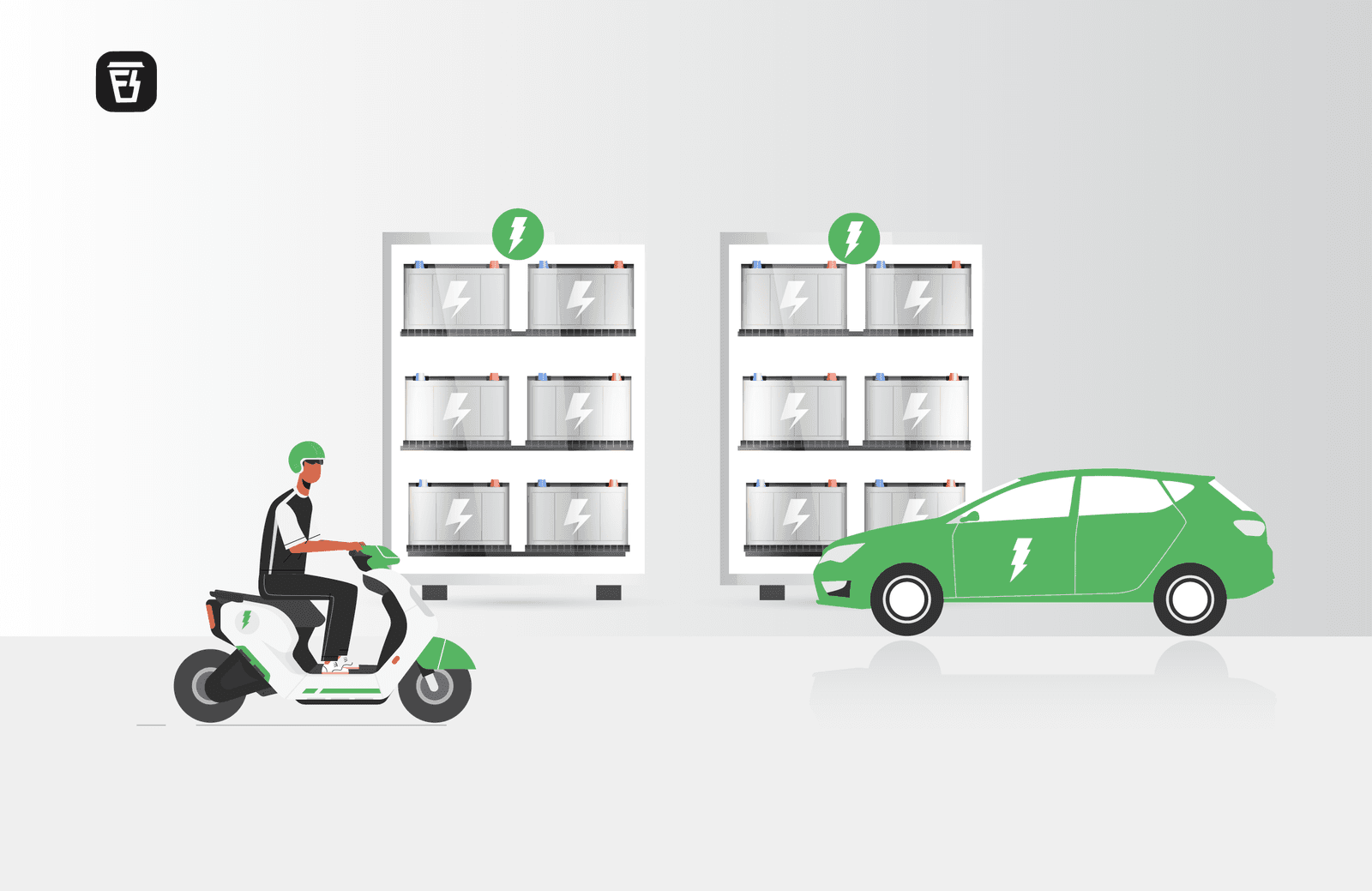
Instead of selling batteries as fixed components welded into a product, the vision is a swappable, plug-and-play, connected battery ecosystem. What I call Cloud Batteries for Future Mobility.
In this model, a fleet operator doesn't purchase battery packs. They join a battery network, swap depleted units for charged ones in minutes, and pay energy fees based on actual usage. Manufacturers eliminate battery cost from their bill of materials. Operators convert unpredictable capital expenditure into manageable operational costs. And every battery in the network is continuously monitored, optimally charged, and professionally maintained.
This isn't a thought experiment. The Battery-as-a-Service market is projected to exceed $11 billion by 2032 [2]. Companies like Gogoro and NIO are already running large-scale swap networks with millions of monthly exchanges [3]. The infrastructure model is proven. The question is who builds it for non-automotive sectors.
Why Cloud BMS Is the Enabler
A traditional BMS monitors and protects a battery locally: voltages, temperatures, state of charge at the pack level. Essential, but limited to what happens inside the enclosure.
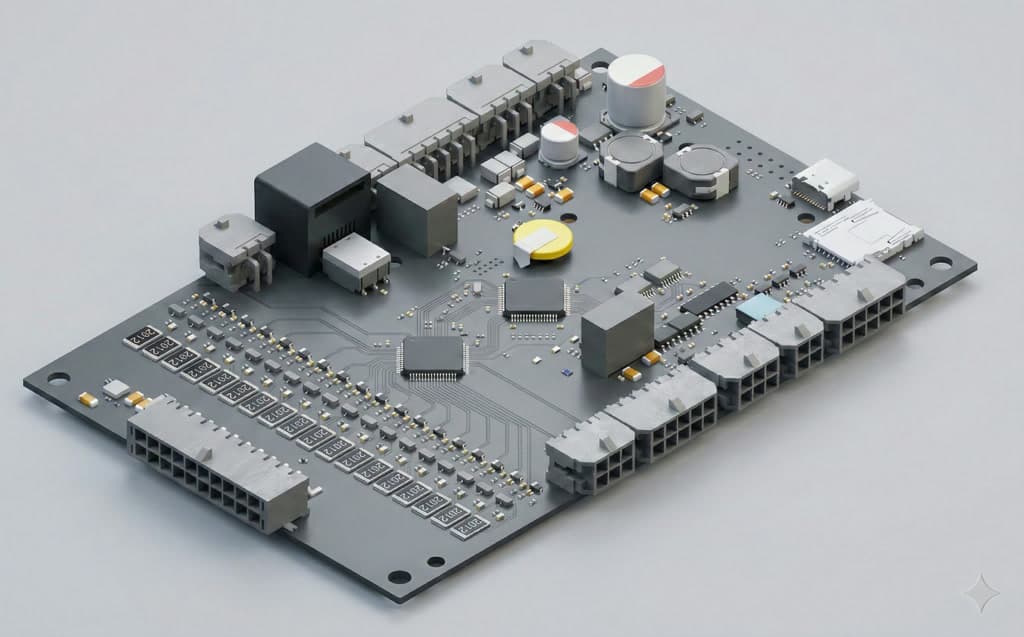
Cloud-connected BMS adds what makes Battery-as-a-Service possible [4]: every data point transmitted to a platform where it's aggregated across the entire network and turned into operational intelligence. Remote monitoring, fleet-wide analytics, over-the-air updates, and predictive maintenance become standard capabilities instead of custom integrations.
The automotive OEMs are building proprietary cloud systems for their vehicles. But sectors like light EVs, energy storage, logistics, and industrial equipment need the same level of battery intelligence without the budget to build it from scratch. Platform-based cloud BMS fills that gap, and it's where the market opportunity is largest.
Regulation Is Accelerating the Shift
The EU Battery Regulation will require digital battery passports for every industrial and EV battery by February 2027 [5]. Companies already running on cloud BMS platforms will find compliance straightforward, because the lifecycle data is already being collected. Those without connected infrastructure face expensive retrofitting under deadline pressure.
We have begun developing passport generation and carbon footprint tracking as core capabilities within our cloud platform [6], designing the data architecture early enough to get the schema right from the ground up.
The Numbers Point One Direction
Battery pack prices have fallen to around $115 per kWh [7]. The IEA projects EV battery demand will surpass 3 TWh by 2030 [8]. Every industry trend (passport regulations, the explosion of light electric vehicles, growing demand for grid-scale storage) points toward batteries managed as connected, service-delivered assets rather than static components buried in products.
The question isn't whether Battery-as-a-Service becomes the standard model. It's whether the infrastructure to support it will be ready when the market tips. That infrastructure starts with cloud-connected BMS: embedded hardware that collects the data, a cloud platform that makes sense of it, and a software ecosystem that turns intelligence into operational decisions.
The companies that build this end-to-end will define what battery infrastructure looks like for the next decade. That's the opportunity we're building toward.
References
- [1]McKinsey & Company, Battery 2030: Resilient, Sustainable, and Circular — The Battery Value Chain
- [2]Spherical Insights, Global Battery-as-a-Service Market Size and Forecast to 2032
- [3]Gogoro — Battery Swapping Platform and Network Infrastructure
- [4]LiBat — Battery Management Systems: Complete Product Lineup and Communication Interfaces
- [5]Regulation (EU) 2023/1542 — Concerning Batteries and Waste Batteries, Digital Battery Passport Requirements
- [6]LiBat — Configuration Tools: LiMon PC Tool, LiMon CONNECT, and LiBat CONNECT Mobile
- [7]BloombergNEF, Lithium-Ion Battery Pack Prices Hit Record Low of $115/kWh, 2024
- [8]IEA, Global EV Outlook 2024 — Battery Demand Projections to 2030